Five Stars on the Glass, Silence on the Phone: What Your Takeaway's Rating Actually Covers
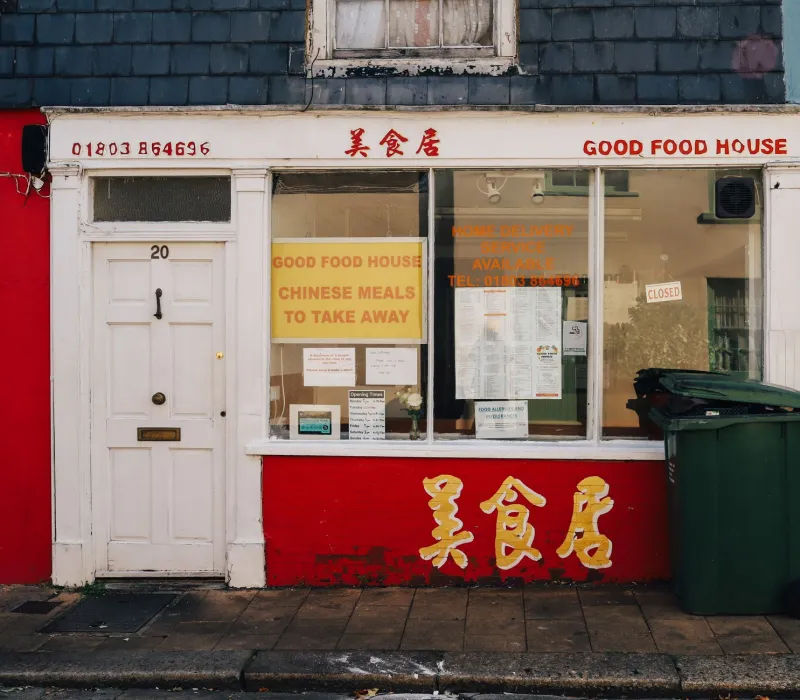
Friday, half six, the heating's on and nobody in the house wants to cook. You've got three takeaway tabs open, one of them has a 5 in a green box on the door, and the decision feels made. Fair enough — it's a useful shortcut, and it's public information for a reason. But a rating is a photograph of a kitchen on one particular afternoon, not a live feed. Treat it as the beginning of your check rather than the end of it.
What the Scheme Is Actually Measuring
The Food Hygiene Rating Scheme (FHRS) is run by the Food Standards Agency with local councils in England, Wales and Northern Ireland. Scotland uses its own system — the Food Hygiene Information Scheme — which gives a pass or an improvement required outcome rather than a number, so don't be thrown if a Scottish place has no stars to show.
In the FHRS, a rating is built from three strands:
- How food is handled — temperature control, separation of raw and cooked, storage.
- The condition of the premises — cleanliness, structure, pest control, the state of the kitchen itself.
- Management of food safety — whether the people in charge understand the risks and can show you a system (usually some form of Safer Food, Better Business paperwork).
Notice what isn't in that list: the quality of the cooking, whether the chicken tikka is any good, or how the food travels to your door. The inspector isn't eating your dinner. They're looking at the process behind it, on a date that could be six, twelve or eighteen months ago depending on the premises' risk category.
One practical point about the distribution of scores: the scheme is heavily weighted towards the top. The overwhelming majority of rated businesses in the UK hold a 5, which is why a 3 should make you curious rather than panicky, and a 5 should not switch off your brain entirely.
The Sticker and the Listing Don't Always Match
This is the bit that trips people up. There are several ordinary, non-sinister reasons a window sticker and an online entry can disagree:
- The sticker is old. A re-inspection may have moved the business from a 3 to a 5 (or the reverse), and nobody has peeled the old one off. Display is mandatory in Wales and Northern Ireland, but voluntary in England — so a missing sticker means nothing either way. In England, businesses with an online presence are expected to show their rating there too, which is a far better place to look than the glass.
- You're looking at the wrong address. A high street name with three branches has three separate ratings. Check the specific premises you're ordering from, not the brand.
- The operator has changed. A rating attaches to the business at an address. If someone new took over the kitchen in the spring, the paperwork may still be catching up, and you'll sometimes see the honest status of "awaiting inspection". A new opening without a rating yet isn't a red flag — it's just an unknown.
- It's a delivery-only kitchen. These are registered and inspected like anyone else, so there should be a rating — but the address may be an industrial unit you've never heard of, and searching by the trading name on the app won't always find it.
The reliable move is to search the FSA's own ratings tool by postcode rather than trusting an app, a sticker, or a review site that scraped its data in 2023.
The Things a Score Genuinely Doesn't Tell You
Here's where the phone comes in. Two minutes on the line covers more ground than a whole evening of scrolling.
Allergens
Allergen management is part of what an inspector assesses, so a well-run kitchen should have a written matrix covering the fourteen regulated allergens. But the score doesn't tell you whether the person taking your order tonight can read it, or whether the wok is shared. If you're ordering for someone with a serious allergy, ask directly: is there a written allergen list I can see, and can you tell me about cross-contact in the kitchen? A vague "it should be fine" is your answer, just not the one you wanted.
Reheating and travel time
Delivery is the weak link in any takeaway. Ask how long a typical run takes to your postcode, and whether they'll tell you the food needs reheating on arrival. If a place quotes forty-five minutes to a fifteen-minute journey away, that's a logistics question, not a hygiene one — but it affects your dinner all the same.
Who's driving
The rating covers the kitchen, full stop. It says nothing about whether the courier is insured, whether the bag is insulated, or whether the rider has a hundred yards of pavement to navigate. If it matters to you, order direct and ask.
Whether it's the same kitchen you rated
Dark kitchens and shared units mean the name on the app isn't always the name on the registration. If you can't find a rating for the trading name, ask the restaurant which local authority they're registered with. Anyone legitimate will know.
A Short Pre-Order Check
- Search the FSA ratings site by postcode, not by brand name.
- Note the inspection date, not just the number.
- Check whether you're looking at the right branch or unit.
- Ring once if allergies, reheating or delivery times matter to you.
- Keep the 5 in perspective — it's a snapshot of a process, and a good sign, not a guarantee.
None of this is a reason to swear off takeaways, which would be a bleak way to spend a November. It's just a reminder that the sticker in the window is the council's summary of one day in one kitchen — and the rest of the picture is yours to fill in.