Chalk Is Cheap: Testing a Farm Shop's 'Local' Claim One Basket at a Time
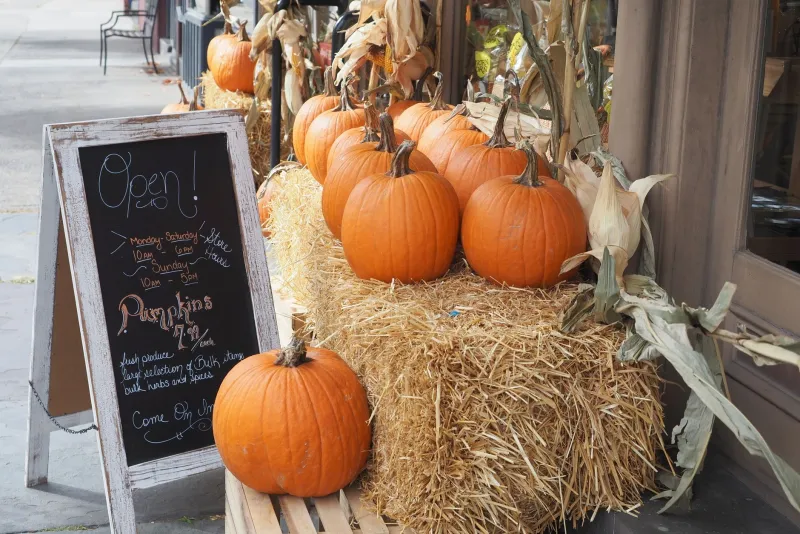
There's a particular sort of blackboard you see outside a good farm shop: chalked, slightly wonky, and promising something like LOCAL ASPARAGUS — 4 MILES. It's a lovely thing. It's also, strictly speaking, a claim rather than a fact, and the gap between the two is where a lot of grocery money quietly goes.
The good news is that you don't need to become a produce detective to shop well. A few habits — a glance at a sticker, one question at the counter, a mental note of what month it is — will tell you most of what you need to know in about five minutes.
'Local' has no rulebook, so the board does the talking
Start with the word itself. Unlike organic, which runs through a certification system, or Red Tractor, which is an assurance scheme about standards rather than distance, local has no fixed legal meaning in UK retail. It can mean four miles, forty miles, or 'the wholesaler we use is based in the same county as our warehouse'.
None of that makes a shop dishonest. It just means the sign is a starting point. What you're looking for is corroboration — something on the shelf that backs the chalk up.
Read the board like a map, not a slogan
Some blackboards are genuinely informative. Look for:
- A place name plus a distance. 'Wellington, 6 miles' is a claim you can check and a sign of confidence. 'From the region' is not.
- A grower's name. 'Sarah's field' or 'Hall Farm' beats 'our suppliers' every time.
- The words 'our own'. Strongest claim on the board. If a shop grows it, rears it or bakes it, they usually can't wait to say so.
- A date. 'Picked this morning' has a lovely specificity to it. 'Fresh' does not.
Watch for the softer wording too: locally sourced, regional produce, supporting local farmers. These are not lies, but they're vague enough that your next stop should be the crate itself.
Follow the packaging, not the poster
The produce tells its own story if you look at the small print.
Loose veg often carries a little label or a sticker with a country of origin — legally required for most fresh produce sold loose in the UK. A tray of tomatoes under a hand-painted 'Kentish' sign is worth turning over. If the sticker says Spain, that's not a scandal; imported produce fills gaps all year round. What matters is whether the shop is honest about it, or whether the sign implies otherwise.
Boxes and crates behind the counter are even better. Growers' names, farm addresses, class labels, the odd bit of handwriting — all of it is evidence. A shop that leaves the crates visible is usually a shop with nothing to hide.
The seasonality test does most of the work
This is the single most useful check, and it costs nothing but a bit of general knowledge.
British asparagus runs roughly late April to June. Strawberries peak in summer, though glasshouse crops stretch the season. Apples store well into the new year, but freshly picked ones don't appear in March. Game has a season. Lamb has a season.
So if you're standing in a shop in February looking at a sign that says 'our own asparagus', something in that sentence needs explaining. An honest answer — 'no, ours finished in June, this is imported' — is fine. A shrug is an answer too.
Three questions, asked pleasantly
You don't need a clipboard. Ask while you're paying, and keep it light:
- Where was this grown?
- Who grows it for you?
- When was it picked?
Staff who deal with the same growers week in, week out tend to answer instantly and in detail. Hesitation isn't proof of anything, but a long pause followed by 'it comes from our supplier' tells you the produce is a line item, not a relationship.
The chiller cabinet is where claims live or die
The fresh counters are the most revealing part of any shop.
- Cheese with a named dairy and a county is a good sign.
- Meat with a named farm, a breed, or an abattoir mentioned on the label is a very good sign.
- Eggs with a farm stamp you can actually read are worth a look.
- Bakery with a production note — 'baked here daily' versus 'baked for us' — is worth noticing.
A single anonymous block of something under a hand-written sign is the least informative arrangement on offer. Not necessarily bad, just unproven.
The boring paperwork still counts
Localness and food safety are different questions, and both matter. Every food business in the UK is inspected and given a Food Hygiene Rating Scheme score, and most shops display the sticker near the till or door. It takes ten seconds to check the rating online against the shop's address.
While you're at it, glance at the dates on the chilled stuff and how full the shelves are. Fresh, fast-turning stock is a better sign of a functioning shop than any amount of bunting.
The honest middle ground is fine
Here's the fair-minded bit. A farm shop can be genuinely committed to its own fields and stock oranges, coffee and olive oil. Nobody expects a Hampshire grower to produce lemons.
The only real problem is blur — where the local story is applied to everything in the room regardless of where it came from. If a shop separates the two clearly, with signage that says 'ours' on one shelf and 'imported' on another, that's a shop worth your loyalty. If everything is bathed in the same warm glow of the word 'local', you'll need to do the work yourself.
A five-minute basket check
Before you reach the till:
- Does the blackboard name a place, a person or a distance?
- Does the packaging agree with the sign?
- Is the produce in season, and does the shop admit it when it isn't?
- Can staff name the grower without checking?
- Are the fresh counters labelled with farms and dairies rather than categories?
- Is the hygiene rating displayed, and does it check out online?
One last thing before you drive off
Good farm shops change their boards constantly, because the fields change. If the chalk looks identical in July and in November, that's not a sign of consistency — it's a sign of a template.
And if you're browsing listings on FindIt UK before setting out, read the photos as carefully as the description. A picture of a real chalkboard naming a real farm is worth more than a paragraph of marketing copy. Look for reviews that mention provenance, ask in the comments, and treat a shop's willingness to say 'that one's not ours' as the strongest recommendation on the shelf.