The Separate Sink Test: Vetting a Café's Gluten-Free Claims Before You Sit Down
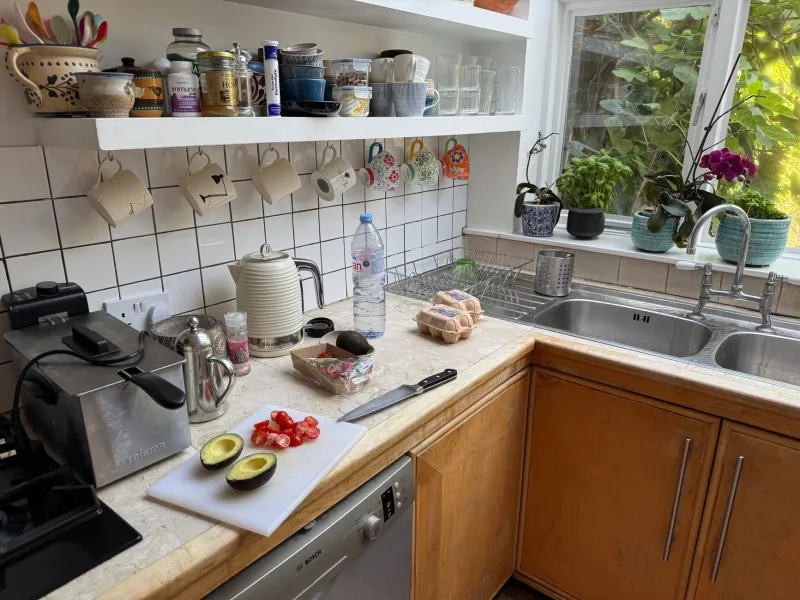
There is a particular kind of hope that comes with seeing a little 'GF' next to a sandwich in a café window. For anyone with coeliac disease, that hope is usually followed by a quieter, more practical question: yes, but where does the flour live? It is not cynicism. It is just what happens when you have spent enough time learning that a gluten-free ingredient can still meet a crumb-covered toaster.
So this is not a guide to finding the perfect café. It is a guide to vetting one before you rely on it — using local listings, a short phone call, and a few questions that separate a genuine effort from a hopeful label.
A Label Is a Starting Point, Not a Guarantee
In the UK, food labelled 'gluten-free' has to meet legal compositional standards, and since 2021 Natasha's Law has required allergen information to be attached to pre-packed for direct sale food. That is genuinely useful. But a café kitchen is not a laboratory. Cross-contamination can happen in the space between the prep board and the plate: a shared toaster, a tub of butter used for both regular and GF bread, a fryer that has seen battered fish all morning, or a dusting of flour from the pastry bench.
For someone with coeliac disease, 'a small amount' is not a small amount. The label tells you what is in the food. The kitchen tells you what else might be in it.
The Questions That Actually Matter
You do not need to interrogate anyone. You just need to ask the questions that reveal how the kitchen works. A good café will have answered them before, and the answers will be specific rather than theatrical.
- Where is the gluten-free bread prepared? 'On the same bench, but we wipe it down' is different from 'on a separate board, with a separate knife, away from the flour.'
- Is there a dedicated toaster? If the answer is no, ask whether they use toaster bags or a separate grill. A shared toaster is one of the most common cross-contamination points.
- What about the fryer? Chips and other fried foods are only gluten-free if the fryer is dedicated. If the same oil has fried breaded items, it is not a coeliac-safe option.
- Which spreads and condiments are safe? A communal butter dish, jam jar, or coleslaw spoon can carry crumbs. Ask whether they use sealed portions or a fresh tub for allergy orders.
- Do you have an allergen matrix? Staff should be able to check rather than guess. A shrug is not an answer; a folder is a good sign.
Listen for honesty. 'We can't guarantee there's no cross-contamination' is a better answer than a breezy 'oh, it's all fine.' The first lets you decide. The second asks you to take a risk on someone else's confidence.
Read the Room Before You Read the Menu
Some things are visible before you order. Is there a separate prep area behind the counter, or is everything happening in one small space? Are there signs about allergen procedures? Does the menu distinguish between 'gluten-free' and 'gluten-free option'? Does the café belong to a recognised gluten-free accreditation scheme, such as Coeliac UK's GF accreditation? That last one is not a magic shield, but it does mean the kitchen has been through a formal check.
Also notice how staff respond when you mention coeliac disease rather than 'gluten-free'. If they immediately ask whether it is an allergy or intolerance, that is a good sign. If they look panicked and offer you a packet of crisps, that is information too.
A Short Phone Call Beats a Long Review
Reviews are useful for atmosphere, coffee, and whether the cakes look good. They are less reliable for allergy safety. One person's 'amazing gluten-free options' might mean 'they had a brownie once.' Another person's 'not safe for coeliacs' might be based on a single bad day.
A quick call at a quiet time — mid-afternoon, not the Saturday brunch rush — will tell you more. Ask your two or three key questions, listen to the tone, and trust the answer. If they say they cannot guarantee safety, believe them and move on. If they say they have a separate area and a dedicated toaster, ask when it was last checked. You are not being difficult. You are being a customer with a medical need, which is a normal thing to be.
Using Local Listings Without Being Fooled
This is where a directory like FindIt UK can help — not as a guarantee, but as a shortlist. Search for cafés near you, then look for repeated mentions of allergy awareness in reviews. Cross-check with Coeliac UK's own directory if you can. Look at the café's own website or social media for an allergen statement. If a venue lists 'gluten-free' but says nothing about preparation, treat it as a question to ask, not a fact to rely on.
Local knowledge matters too. A café that has been quietly feeding coeliac regulars for years will often have a paper trail of happy comments. A new place with a big 'GF' banner and no detail may be enthusiastic but untested. Neither is automatically good or bad. You are just gathering evidence.
When to Walk Away
If the answers are vague, if the only gluten-free option is a pre-packed biscuit, or if the kitchen seems annoyed by the question, you are allowed to leave. You do not owe anyone your custom. A café that takes allergies seriously will not make you feel like a nuisance. It will have a routine, and it will be glad you asked.
And if you find a good one, tell people. Leave a review that mentions the separate toaster and the knowledgeable staff. That is how local listings get better, and how the next coeliac customer walks in with a little less hope and a lot more confidence.