The Bus Runs on Tuesday; Your Day Off Is Sunday: A Rural Day-Out Reality Check
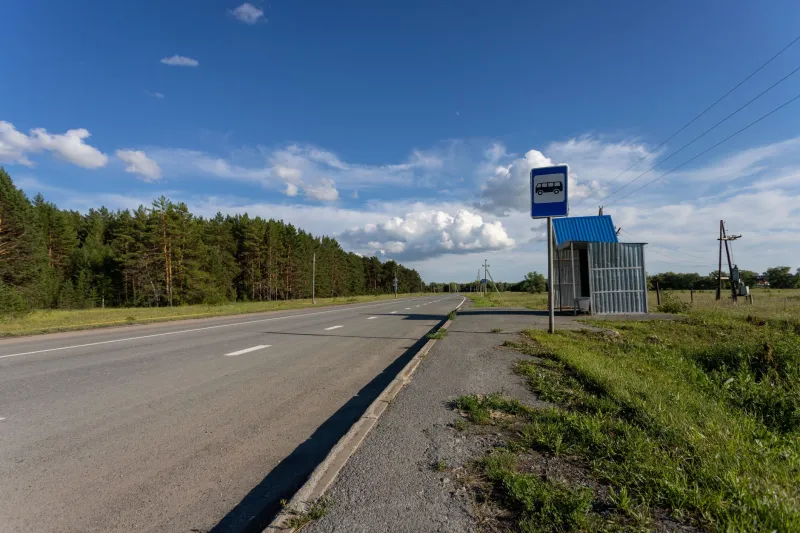
There's a particular kind of disappointment that only arrives at 4.15pm in a village with one bench, one bin and a bus stop with no timetable on it. You've had a lovely afternoon. You've spent money. And now you're looking at a timetable that reveals the last bus left at 2.40pm, or runs on Tuesdays only, or — the classic — exists on the council website but not on the actual road.
Rural day-out listings are often written by people who drove there. That's not a conspiracy, it's just how it happens. A café gets described as "easily reached", a market town as "a great car-free day out", and a beauty spot as "accessible" — and each of those phrases is doing a lot of unexamined heavy lifting. Before you pay for parking, book a table or buy a ticket, it's worth checking what the transport really looks like.
Start with the return journey, not the outbound one
Almost everyone checks how to get there. Far fewer check how to get back. This is the single most useful habit you can build, because an outbound service is usually the generous one — morning buses exist to carry people to work, college or the shops. It's the afternoon and evening that quietly thin out.
So open the timetable and work backwards from the time you'd actually want to leave. Not the time you'd leave if everything ran perfectly. The time you'd leave if lunch ran long and someone wanted pudding.
Two things to watch for:
- The gap between the last two buses. A 5.10pm and a 5.15pm isn't a service, it's a coincidence. If you miss the first, you're not waiting twenty minutes, you're waiting until tomorrow.
- The last bus that actually stops where you are. Village stops often sit on a loop, and the bus that drops you outside the pub may return via a different road entirely. Check the return stop, not just the outbound one.
Read the timetable the way the operator wrote it, not the way the app shows it
Aggregator apps are brilliant and also occasionally confident about things that aren't true. Live tracking can show a bus that has been cancelled, and journey planners have been known to suggest a connection that requires a nineteen-minute walk along a road with no pavement.
Use the app to plan, then verify with the operator's own website or the council's public transport pages. For England, Traveline is a solid cross-check, and operator sites usually carry the PDF timetable — which is where the small print lives.
That small print is where you'll find the phrases that decide your day:
- "School days only" — meaning school holidays are a different service entirely.
- "Market days" — often Wednesday or Saturday, and not much else.
- "Summer timetable" — frequently Easter to late October, then it stops pretending.
- "Bank holidays" — usually a Sunday service, sometimes nothing at all.
- "Hail and ride" — you'll need to be visible and confident, and the driver won't be looking for you at a stop that doesn't exist.
Worth knowing, too: many rural timetables change in late October and again in spring. A blog post from three summers ago is not a timetable.
Ask the question listings never answer: is there a Sunday service?
For a lot of rural areas, the honest answer is no. Not a reduced one — none. Sunday and bank holiday buses are frequently funded differently, run seasonally, or exist only as a summer "explorer" style service aimed at walkers.
If a listing describes somewhere as a Sunday day out, that's your cue to check independently. Search the operator's name plus "Sunday service" rather than trusting the phrase in the listing. And if you find one, look at how many journeys there actually are. A single return trip at 10am and 4pm is a service, technically, but it's also a schedule that dictates your entire day.
Dial-a-ride, community cars and the schemes nobody advertises
Here's the part that often gets missed: in many rural areas the bus isn't the bus. It's a demand-responsive service — dial-a-ride, a community minibus, a volunteer car scheme, or a county-run "flexible transport" arrangement where you book a seat rather than wait at a stop.
These are genuinely useful and genuinely under-used, but they come with their own rules:
- You usually have to book ahead — sometimes by 3pm the previous day, sometimes further out.
- You may need to register first, which can take a few days.
- Pick-up points are often fixed — a village hall, a surgery, a specific stop — rather than your front door.
- They may only run certain days, often tied to shopping or medical trips.
- Return times can be rigid, because the driver has other passengers to collect.
Your council's transport pages, the local parish website and the village noticeboard are the places to look. If you're unsure, ring the scheme and ask directly — "can I get back at 4pm on a Saturday?" is a perfectly reasonable opening line.
Spot the listings that quietly assume you have a car
A few tells to look for, whether you're reading a directory entry, a tourist board page or a well-meaning blog:
- Parking is described in detail; public transport gets one vague sentence.
- The phrase "just a short drive from" appears more than once.
- Postcode given, nearest station not mentioned.
- Directions start at a motorway junction.
- "Accessible" used without saying accessible by what.
None of that makes the place a bad day out. It just means the listing was written for drivers, and you should plan accordingly rather than assume.
The parking maths, and the taxi fallback
One last practical check, because it's the bit people regret. Compare the cost of a return bus fare with the full cost of parking — and remember that rural car parks often use pay-by-app systems with a minimum spend, or charge by the hour with no all-day option.
More importantly, price the fallback. If the last bus goes at 5pm and you miss it, what does a taxi cost from there? In deep countryside it can be £40–£70, and it may need booking an hour ahead. Knowing that number in advance changes how relaxed you feel about the whole day — you're not anxious, you've just made a decision.
A five-minute check before you book
Do this and you'll rarely be caught out:
- Find the operator's own timetable, not just an app.
- Identify the last realistic return journey, then subtract fifteen minutes of buffer.
- Check the day of the week and whether it's a school day.
- Look up the local dial-a-ride or community car scheme and note the booking deadline.
- Price the taxi as a worst-case fallback.
- Ring the venue if the listing is vague — they usually know, and they're usually happy to be asked.
A rural day out isn't less enjoyable for being checked properly. If anything, it's better: you spend the afternoon looking at the view instead of at your phone, wondering whether that bus is coming. The timetable will tell you the truth. You just have to read it before you pay for the parking.