Nobody Checks the Third Rung: How to Vet a Window Cleaner Who Works Above Your Head
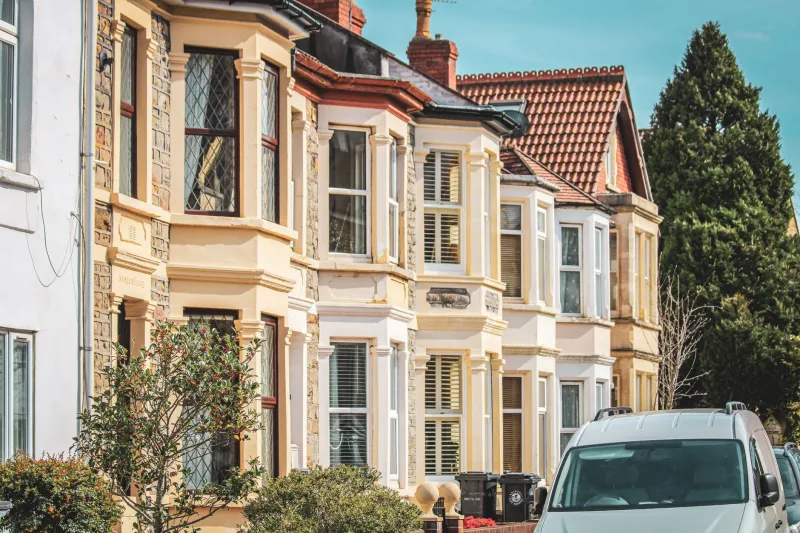
Most of us hire a window cleaner the way we hire a taxi. Someone's already doing next door, the price sounds fair, and the glass ends up clean. Job done, kettle on.
But a window cleaner isn't quite a taxi. You're not paying for sparkle. You're giving someone permission to work at height on your property, above a paved path, a parked car and possibly a small child's trampoline. That's a different sort of transaction, and it deserves a slightly better set of questions than "how much for the front?"
The good news: a decent local cleaner will answer all of this in about a minute, without taking offence. The ones who get prickly are telling you something useful.
Start with the ladder question, not the price
Two cleaners can quote you the same fifteenner and be doing two completely different jobs. One arrives with a water-fed pole system — a long carbon pole pumping purified water up to the top floor while they stand on the path. The other props an aluminium ladder against your fascia and climbs.
Neither is automatically wrong. But you're allowed to ask which one is turning up, because it changes the risk sitting over your hydrangeas.
Pole work is generally the safer option for anything above the ground floor, and most of the trade has moved that way. It's worth asking anyway, because "we'll see when we get there" is not a method statement.
What "fully insured" should actually mean
Every van in Britain claims to be fully insured. It's the most repeated, least evidenced phrase in local services.
What you want is public liability insurance, which covers damage to your property or injury to someone else. Typical domestic-sized policies sit somewhere between £1 million and £5 million. Ask for the certificate — a proper PDF, dated this year, with the business name matching the name on the quote. If the certificate says "J. Smith trading as Smith's Window Services" and your quote is from "Smith & Sons Ltd", make them explain the gap.
If they bring a mate along, they should also hold employers' liability cover. That's a legal requirement in the UK for almost any business with staff, and the minimum is £5 million. A two-man round with no employers' liability is a two-man problem waiting to happen.
One more thing worth asking out loud: does the policy actually cover work at height? Some trades policies quietly exclude it, and a window cleaner leaning a ladder against your gutter is the definition of work at height under the Working at Height Regulations 2005.
Gutters are not structural, and ladders know it
Here's the detail that separates the careful from the casual. A ladder should be footed or tied off, sitting on firm, level ground at roughly a 75-degree angle — one out for every four up. Your gutter and fascia board are there to carry rainwater, not a human being. Leaning a ladder against a gutter is one of the most common causes of both damaged properties and ambulance callouts.
So watch for the small stuff. Do they carry a ladder mat or stabiliser? Do they use a standoff bracket to keep the ladder off the guttering? Do they look at your gravel drive, sloping patio or loose drain cover and say "I'll need to move that"? A cleaner who ignores the ground conditions is a cleaner who ignores everything else.
Get it in writing, even if it's three lines
You don't need a ten-page contract for a £15 window clean. You do need a text or email confirming the price, the frequency, what's included and who pays if something cracks.
Ask specifically: are the upstairs windows, the frames and the sills in the price, or is that extra? Does a conservatory roof count? What about a pane that's already got a hairline crack in it — will they flag it before starting or mention it afterwards?
A five-minute desk check before you say yes
None of this takes long, and most of it you can do with a mug of tea.
- Company check: if they're a limited company, a free search on Companies House takes seconds and confirms the name and registered address. A dissolved company is a red flag with a bow on it.
- Reviews that spread over time: twenty five-star reviews all posted in the same fortnight are worth less than eight reviews spread over three years.
- Neighbours: ask two of them, not one. And ask whether the cleaner has ever had to come back to fix something.
- The phone number: does it ring through to a named business, or a voicemail that just says "hello"?
- Cold callers: if someone knocks offering to do your windows today because they're "in the area", take a number and do the checks. Trading Standards and Citizens Advice both see a pattern here that rarely ends well.
Red flags worth taking seriously
Cash up front for a "special rate". Pressure to add gutter clearing, fascia washing or a pressure-wash of the drive before you've seen so much as a squeegee. No fixed address. A refusal to hand over insurance details, or the phrase "my insurance is through a mate". A van with no name on it and a quote that changes between the doorstep and the invoice.
And do flag your own obstacles early: the dog, the sticky gate, the alarm code, the hanging basket over the front door, the window that doesn't close properly. A cleaner who knows about the cat before they open the gate is a cleaner who's less likely to leave it open.
The short version
You're not buying a shine. You're buying a person, a method and a policy. Ask how they reach the top floor, ask to see the insurance certificate, get the price and the frequency in a text, and glance at Companies House. Then let them get on with it — and enjoy the fact that you can now actually see out of the landing window.